


Jinko Solar Panel Tiger Neo N-Type 72HL4-BDV (570W-590W)
The Painel solar Jinko Tiger Neo N-type 72HL4-BDV is a premium bifacial dual-glass photovoltaic module available in 570W, 575W, 580W, 585W and 590W power classes. Built around advanced N-type TOPCon mono-crystalline cells, this Painel solar Jinko combines high conversion efficiency, excellent low-light performance and outstanding durability, making it the ideal choice for utility-scale solar farms and large commercial and industrial (C&I) installations. Manufactured by the world’s leading solar brand and certified to international IEC, TUV and UL standards, every module in this series delivers bankable quality you can trust for 30 years and beyond.
Jinko Solar Panel Specifications
| Mecânico | Características | |
| Tipo de célula | Tipo N Monocristalino | |
| No. of cells: 144 (2×72) | ||
| Dimensions: 2278×1134×30mm (89.69×44.65×1.18 inch) | ||
| Weight: 32 kg (70.55 lbs) | ||
| Front Glass: 2.0mm, Anti-Reflection Coating | ||
| Back Glass: 2.0mm, Heat Strengthened Glass | ||
| Moldura | Liga de alumínio anodizado | |
| Caixa de derivação | Classificação IP68 | |
| Cabos de saída | TUV 1×4.0mm² (+):400mm, (-):200mm or Customized | Comprimento |
As the table above shows, this Jinko solar panel uses 144 half-cut N-type mono-crystalline cells in a 2×72 layout, protected by 2.0mm anti-reflection front glass and 2.0mm heat-strengthened back glass. The anodized aluminium alloy frame keeps the 32 kg module rigid and corrosion-resistant, while the IP68-rated junction box guarantees reliable connections in all weather conditions.
Key Features of This Jinko Solar Panel
N-Type TOPCon Cell Technology
Compared with mainstream P-type PERC modules, the N-type TOPCon cells inside this module deliver higher efficiency, lower first-year and annual degradation, and a superior temperature coefficient. The result is more kilowatt-hours per installed watt over the whole project lifetime, which directly improves the return on investment for developers, EPC contractors and asset owners. With module efficiencies above 22%, fewer panels are needed to reach the same system capacity, saving structure, cabling and labor costs on site.
Tecnologia SMBB
SMBB (Super Multi-Busbar) technology provides better light trapping and current collection to improve module power output and reliability. By using more and thinner busbars, the module reduces resistive losses and micro-crack sensitivity, so it keeps generating more energy day after day, even under mechanical stress and repeated thermal cycling.
Tecnologia Hot 2.0
The N-type module with Hot 2.0 technology has better reliability and lower LID/LETID. Your modules maintain a higher performance level year after year, protecting the energy yield assumptions in your financial model. This is particularly valuable in the first years of operation, when light-induced degradation affects conventional cell technologies the most.
Low-Light Performance
Thanks to excellent weak-light response, the module starts generating earlier in the morning and keeps producing later in the evening. On cloudy or hazy days it continues to deliver useful output, smoothing the daily generation curve and increasing the total annual yield of the plant.
Resistência PID
Excellent anti-PID performance is guaranteed via an optimized mass-production process and strict materials control. Even in hot and humid climates with high system voltages, the module maintains stable output without potential-induced degradation.
Carga mecânica melhorada
The module is certified to withstand wind loads of 2400 Pascal and snow loads of 5400 Pascal. From coastal typhoon regions to heavy-snow mountain areas, this rugged design gives installers and asset owners complete peace of mind.
Maior potência de saída
Module power increases up to 5.25% compared with conventional modules, generally bringing a significantly lower LCOE (levelized cost of energy) and a higher IRR (internal rate of return) for project investors and owners.
Bifacial Dual-Glass Design
With its transparent dual-glass structure, the Jinko solar panel captures sunlight from both the front and the rear side. Depending on ground reflectivity, bifacial gain can add 5% to 25% of extra energy yield, which makes this module especially profitable on light-colored gravel, concrete or reflective membranes. The dual-glass build also improves the fire rating, moisture resistance and long-term weatherability of the module.
Certifications and Standards
Jinko Solar panels adhere to the most important international standards and certifications, including IEC 61215, IEC 61730, TUV and UL. Production runs under ISO 9001 quality management, ISO 14001 environmental management and ISO 45001 occupational health and safety systems. Every module also passes in-house reliability tests that go well beyond industry requirements, such as extended thermal cycling, damp heat, mechanical load and hail impact testing. These certifications validate the quality, safety and performance of the panels, providing complete assurance to customers, financiers and insurers.
Installation Versatility
The Tiger Neo N-type panels are designed for easy integration into virtually any solar installation. Whether it is a rooftop system, a ground-mounted array or a multi-megawatt solar farm, this Jinko solar panel offers full compatibility with mainstream mounting structures and single-axis trackers. The 144 half-cut cell layout, the IP68-rated junction box and the standard output cables (TUV 1×4.0mm², (+)400mm / (-)200mm or customized length) simplify string design and reduce balance-of-system costs.
Typical Applications
Thanks to its high power class and bifacial gain, this module is a versatile choice for a wide range of projects:
- Utility-scale solar power plants and solar farms
- Commercial and industrial (C&I) rooftop systems
- Ground-mounted arrays with fixed tilt or trackers
- Agrivoltaic, carport and canopy installations
- High-temperature and high-irradiation regions
Because of its low temperature coefficient and minimal degradation, the module performs exceptionally well in hot climates where conventional panels lose a significant share of their output. Project developers in the Middle East, Southern Europe, Latin America, Africa and Southeast Asia consistently select this series for exactly this reason.
Warranty and Quality Assurance
This Jinko solar panel is backed by a 15-year product warranty and a 30-year linear power performance warranty. First-year degradation is below 1.0% and annual degradation is only 0.40% thereafter, which means the modules are guaranteed to still deliver at least 87.4% of their nameplate power after 30 years of operation. That long-term security makes project financing and insurance straightforward and protects your cash flow for decades.
Electrical Performance of the Jinko Solar Panel 72HL4-BDV
Across the 570W to 590W power classes, the Jinko solar panel Tiger Neo 72HL4-BDV maintains module efficiencies above 22%, placing it among the most efficient modules in its class. The N-type TOPCon cell design delivers a low temperature coefficient of approximately -0.29%/°C, so the module keeps more of its rated power on hot summer days than conventional P-type panels. For exact Voc, Isc, Vmp and Imp values per wattage, please request the official datasheet from our team.
Jinko Solar Panel vs. Conventional P-Type Modules
When project developers compare a Jinko solar panel from the Tiger Neo family with a standard P-type PERC module, three differences stand out. First, the N-type cell suffers almost no light-induced degradation, so the first-year energy yield is higher. Second, the bifacial dual-glass construction captures reflected light from the rear side, which a monofacial PERC panel cannot do. Third, the lower annual degradation rate of the Jinko solar panel means the performance gap widens every year, so over a 30-year lifetime the total energy advantage becomes substantial.
Packaging, Shipping and Handling
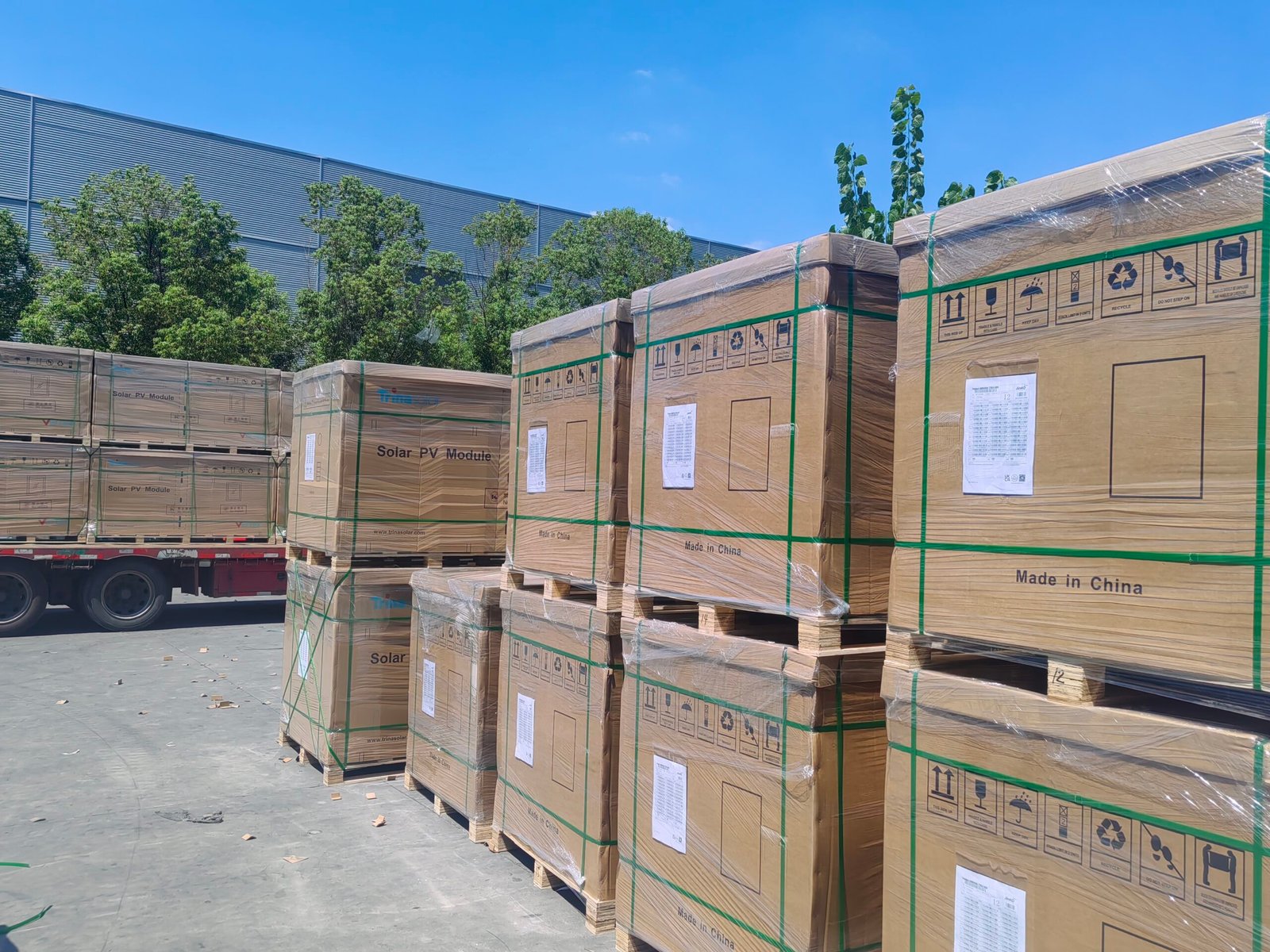
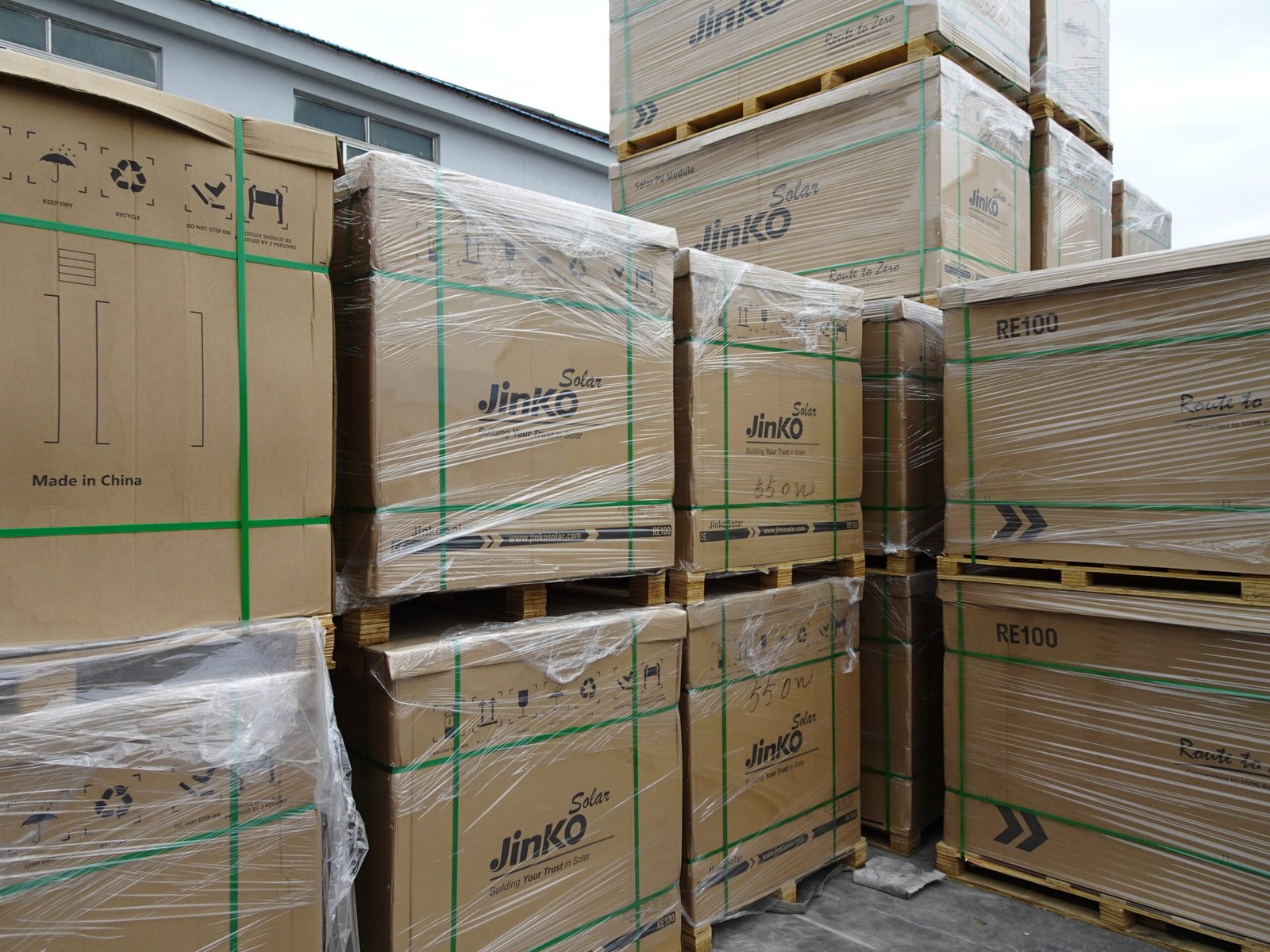
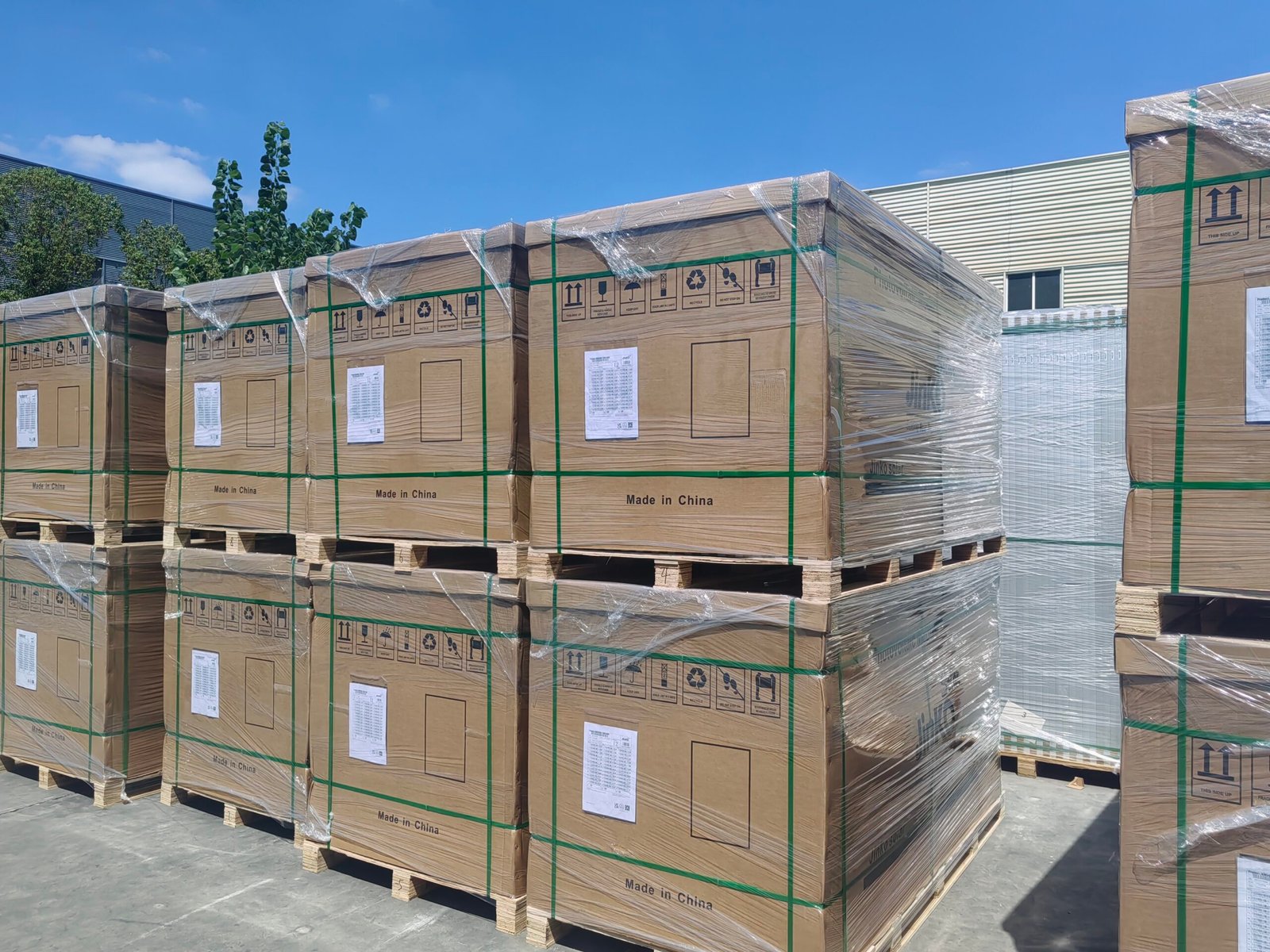
Each Jinko solar panel is packed 36 pieces per pallet, with 720 pieces fitting into a standard 40-foot high-cube container. Pallets are vertically packed and corner-protected to minimize transport damage. For large utility orders we can arrange full-container loads directly from the factory, and for smaller commercial projects we offer mixed pallets and flexible delivery schedules. Every Jinko solar panel ships with its individual serial number and flash-test report, so traceability is guaranteed from production line to project site.
How to Choose the Right Jinko Solar Panel Model
Within the Jinko solar panel portfolio, the 72HL4-BDV series is optimized for large-format, high-power projects. If your roof area is limited, the 54HL4R series with 108 cells offers a more compact footprint. For maximum power per module on open ground, the 78HL4 series reaches even higher wattage. Our engineering team can help you compare the models and select the Jinko solar panel that delivers the best balance of cost, yield and logistics for your specific site conditions.
Frequently Asked Questions About This Jinko Solar Panel
What power classes are available?
The Tiger Neo 72HL4-BDV Jinko solar panel is available in 570W, 575W, 580W, 585W and 590W. All classes share the same dimensions of 2278×1134×30mm, so upgrading wattage never changes the mechanical design of your project.
Is this module suitable for residential roofs?
At 32 kg and over 2.2 meters long, this Jinko solar panel is primarily designed for commercial, industrial and utility-scale installations. For typical residential roofs we usually recommend the smaller 54-cell Tiger Neo models, which are easier to handle on pitched roofs.
How much extra energy does the bifacial design add?
Depending on the reflectivity of the surface below the modules, bifacial gain typically ranges from 5% to 25%. Light-colored gravel, white membranes and concrete give the highest gains, while dark surfaces give less.
What certifications does the module carry?
The module is certified to IEC 61215 and IEC 61730 and carries TUV and UL marks, so a Jinko solar panel from this series can be deployed in Europe, North America and most other markets worldwide without additional testing.
Can I get a sample before placing a bulk order?
Yes. We support sample orders so installers and project developers can verify the build quality, flash-test data and packaging of the Jinko solar panel before committing to container quantities. Contact our sales team for sample pricing and lead time.
Quality Control From Factory to Site
Every Jinko solar panel we supply passes through multiple quality gates: incoming material inspection, in-line electroluminescence testing after cell stringing and lamination, and a final flash test that records the actual power of each module. Automated production lines and strict process control keep cell-to-module losses low and ensure that the power label on the box matches the real output of the module inside. This disciplined manufacturing approach is one reason why the Jinko solar panel brand consistently ranks at the top of independent reliability scorecards.
Long-Term Performance and Degradation
Degradation behavior is where a Jinko solar panel with N-type technology truly separates itself from older designs. With first-year degradation below 1.0% and a linear annual degradation of only 0.40%, the module retains at least 87.4% of its original power after 30 years. Lower degradation directly translates into more kilowatt-hours sold over the life of the plant, which is why financiers increasingly specify N-type modules in their technical requirements.
Why Source Your Jinko Solar Panel From Us
As a specialized photovoltaic modules manufacturer and energy storage solutions provider, we combine factory-direct pricing with professional export service. We keep the most popular Jinko solar panel models in stock for fast dispatch, provide complete documentation for customs clearance, and support you with system design advice before and after the sale. Whether you need one pallet for a commercial roof or fifty containers for a solar farm, our team treats every Jinko solar panel order with the same care.
System Design Tips for Large-Format Modules
When engineering a project around 590-watt modules, string length calculation deserves special attention. Higher module power means fewer strings are needed to reach the same capacity, which reduces cabling, combiner boxes and installation labor. Always size strings according to the lowest expected ambient temperature at the site, respect the maximum system voltage of 1500V, and verify that the chosen inverter MPPT range matches the operating voltage of the string. For bifacial installations, raising the mounting height to at least one meter above ground and using light-colored ground cover measurably increases rear-side yield.
Compatibility With Inverters and Energy Storage
The Tiger Neo series works seamlessly with all mainstream string inverters and central inverters from leading brands. Because this Jinko solar panel is available in narrow 5-watt power classes, mismatch losses within a string stay minimal. For hybrid projects, the modules pair naturally with battery energy storage systems, and our team can supply a complete package of panels, inverters and storage so that all components are matched and warranted together.
Operation, Cleaning and Maintenance
Dual-glass modules are easy to maintain because both surfaces are smooth, hardened glass. In most climates, natural rainfall keeps the modules clean; in dusty regions, a gentle cleaning cycle two to four times per year is usually sufficient. Avoid abrasive tools and high-pressure washers, inspect connectors and mounting clamps annually, and monitor string-level performance through your inverter portal to catch any anomaly early. With minimal care, the modules will deliver stable output for three decades and beyond.
What is the typical lead time?
For stock models, dispatch usually takes three to seven working days after order confirmation. Factory-direct container orders are typically produced and shipped within four to six weeks, depending on quantity and production schedule.
Do you provide technical documentation?
Yes. With every quotation we provide the official datasheet, installation manual, certificates and warranty terms. Flash-test reports and serial number lists are supplied with the shipment, and our engineers remain available for technical questions throughout the project.
Proven Performance in Global Projects
Modules from the Tiger Neo family have been deployed in gigawatt-scale projects across Asia, Europe, the Middle East, Latin America and Africa. From desert power plants to coastal installations, field data consistently confirms the high energy yield and reliability of this technology. Independent test laboratories regularly rank the series among the top performers in reliability scorecards, giving EPC contractors and investors confidence that the modules will perform as modeled for decades.
Sustainability and Environmental Commitment
Choosing a Jinko solar panel also means choosing a manufacturer with a strong sustainability record. The production facilities run increasingly on renewable energy, and the company has committed to ambitious carbon reduction targets across its supply chain. The dual-glass design of this module is fully recyclable at end of life, and the absence of a plastic backsheet reduces long-term environmental impact. For buyers with ESG reporting obligations, complete documentation of environmental certifications is available on request.
What payment and shipping terms do you offer?
We support flexible international trade terms including EXW, FOB, CIF and DDP, and accept T/T, L/C and other common payment methods. Our logistics team works with experienced freight forwarders to ensure your modules arrive safely and on schedule, with full cargo insurance available for every shipment.
Technical Support and After-Sales Service
Our relationship with customers does not end at delivery. We provide remote commissioning support, help your installers with string configuration and monitoring setup, and respond quickly to any warranty claim with a clear, documented process. Spare modules from the same production batch can be reserved for large projects, ensuring that replacements match the original installation perfectly. This full-cycle service approach is designed to protect your investment from the first drawing to the final year of operation. Our multilingual sales and engineering staff are available around the clock to answer questions about specifications, certifications, shipping documents or system integration, so your project never has to wait for information.
Request a Quote
As an experienced photovoltaic modules manufacturer and energy storage solutions provider, we supply the complete JinkoSolar product range at competitive wholesale prices. Browse our full Jinko solar panel category for more models, or learn more about the brand on the official JinkoSolar website. Contact us today for the datasheet, pricing, stock availability and shipping options for the Tiger Neo 72HL4-BDV series — our sales team will reply within 24 hours.


