


Jinko Photovoltaic Panel Tiger Neo N-Type 54HL4R-(V) (425W-445W)
The Jinko photovoltaic panel Tiger Neo N-type 54HL4R-(V) is a compact, high-efficiency mono-facial module available in 425W, 430W, 435W, 440W and 445W power classes. Built on advanced N-type TOPCon mono-crystalline cells, this Jinko photovoltaic panel is purpose-built for residential rooftops, commercial and industrial (C&I) roofs, and distributed-generation projects where space is limited but energy yield matters. With module efficiencies above 22% and a 22 kg lightweight frame, every Jinko photovoltaic panel in this series is easy to handle, quick to install and engineered for three decades of reliable power generation.
Jinko Photovoltaic Panel Specifications
| Mechanical Characteristics | |
| Cell Type | N type Mono-crystalline |
| No. of cells | 108 (2×54) |
| Dimensions | 1762×1134×30mm (69.36×44.65×1.18 inch) |
| Weight | 22 kg (48.50 lbs) |
| Front Glass | 3.2mm, Anti-Reflection Coating, High Transmission, Low Iron, Tempered Glass |
| Frame | Anodized Aluminium Alloy |
| Junction Box | IP68 Rated |
| Output Cables | TUV 1×4.0mm² (+):400mm, (-):200mm or Customized Length |
As the table shows, this Jinko photovoltaic panel uses 108 half-cut N-type mono-crystalline cells in a compact 1762×1134mm footprint. The 3.2mm anti-reflection tempered glass maximizes light transmission, while the anodized aluminium alloy frame and IP68-rated junction box keep the module rigid, corrosion-free and reliably connected in all weather conditions.
Key Features of This Jinko Photovoltaic Panel
N-Type TOPCon Cell Technology
Compared with mainstream P-type PERC products, the N-type TOPCon cells inside this Jinko photovoltaic panel deliver higher conversion efficiency, lower first-year and annual degradation, and a better temperature coefficient. For homeowners and project developers alike, that means more kilowatt-hours per installed watt over the entire system lifetime, which directly improves the payback period of the installation.
SMBB Technology
SMBB (Super Multi-Busbar) technology provides better light trapping and current collection, improving module power output and reliability. More and thinner busbars reduce resistive losses and micro-crack sensitivity, keeping the module productive even after years of thermal cycling.
Hot 2.0 Technology
The N-type module with Hot 2.0 technology offers better reliability and lower LID/LETID degradation. Your modules keep a higher performance level year after year, protecting the energy yield assumptions in your financial model.
Low-Light Performance
Thanks to an excellent weak-light response, the Jinko photovoltaic panel starts generating earlier in the morning and keeps producing later in the evening. On cloudy or hazy days it continues to deliver useful output, smoothing the daily generation curve and increasing total annual yield.
PID Resistance
Excellent anti-PID performance is guaranteed via an optimized mass-production process and strict materials control. Even in humid climates with high system voltages, the module maintains stable output without potential-induced degradation.
Enhanced Mechanical Load
The module is certified to withstand wind loads of 2400 Pascal and snow loads of 5400 Pascal. From storm-prone coastal regions to heavy-snow mountain areas, this rugged design gives installers and homeowners complete peace of mind.
Resistance to Harsh Environments
High salt mist and ammonia resistance make the module suitable for seaside installations, agricultural buildings and industrial zones where lesser panels would corrode or degrade prematurely.
The Ideal Jinko Photovoltaic Panel for Residential Rooftops
At 1762×1134mm and just 22 kg, the 54HL4R-(V) is the Jinko photovoltaic panel designed specifically with rooftop installers in mind. Two-person lifting is easy, the module fits standard residential mounting rails, and its compact size lets you cover complex roof shapes with dormers, chimneys and skylights. If you are looking for a Jinko photovoltaic panel for home use that combines premium efficiency with practical handling, this series is the natural choice.
The same characteristics also make it a strong fit for commercial rooftops, carports and small ground-mount arrays where a larger-format module would be awkward to install or would overload the roof structure.
Certifications and Standards
Every Jinko photovoltaic panel in the Tiger Neo family is produced under ISO 9001 quality management, ISO 14001 environmental management and ISO 45001 occupational health systems. The modules comply with IEC 61215 and IEC 61730, carry TUV and UL marks, and pass in-house reliability tests that go well beyond industry requirements, including extended thermal cycling, damp heat, hail impact and mechanical load testing. These certifications validate the quality, safety and performance of the panels, giving buyers, financiers and insurers complete confidence.
Jinko Photovoltaic Panel vs. Conventional P-Type Panels
When installers compare a Jinko photovoltaic panel from the Tiger Neo family with a standard P-type PERC module, three differences stand out. First, the N-type cell suffers almost no light-induced degradation, so first-year energy yield is higher. Second, the lower temperature coefficient means the panel loses less power on hot summer afternoons, exactly when air-conditioning demand peaks. Third, the lower annual degradation rate of the Jinko photovoltaic panel means the performance gap widens every year, so over a 30-year lifetime the total energy advantage becomes substantial.
Electrical Performance
Across the 425W to 445W power classes, this Jinko photovoltaic panel maintains module efficiencies above 22%, placing it among the most efficient residential-size modules on the market. The N-type TOPCon design delivers a low temperature coefficient of approximately -0.29%/°C, keeping output stable in hot climates. For exact Voc, Isc, Vmp and Imp values per wattage class, please request the official datasheet from our team.
Installation and System Design
The 108 half-cut cell layout, IP68 junction box and standard output cables (TUV 1×4.0mm², (+)400mm / (-)200mm or customized length) make string design straightforward with all mainstream residential string inverters and microinverter systems. Because a Jinko photovoltaic panel from this series is available in narrow 5-watt classes, mismatch losses within a string stay minimal, and the module pairs naturally with hybrid inverters and home battery storage for self-consumption systems.
Packaging and Logistics
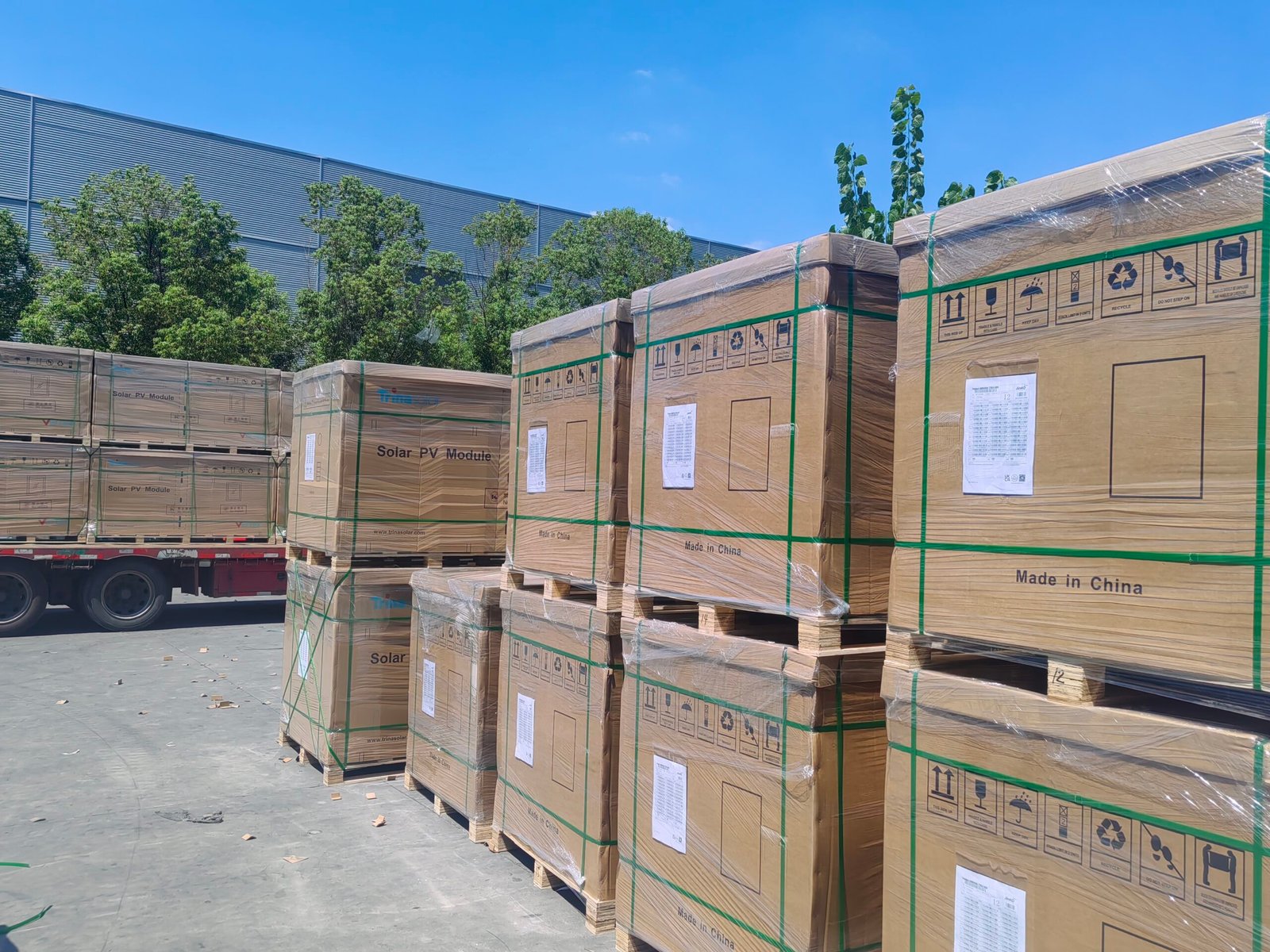
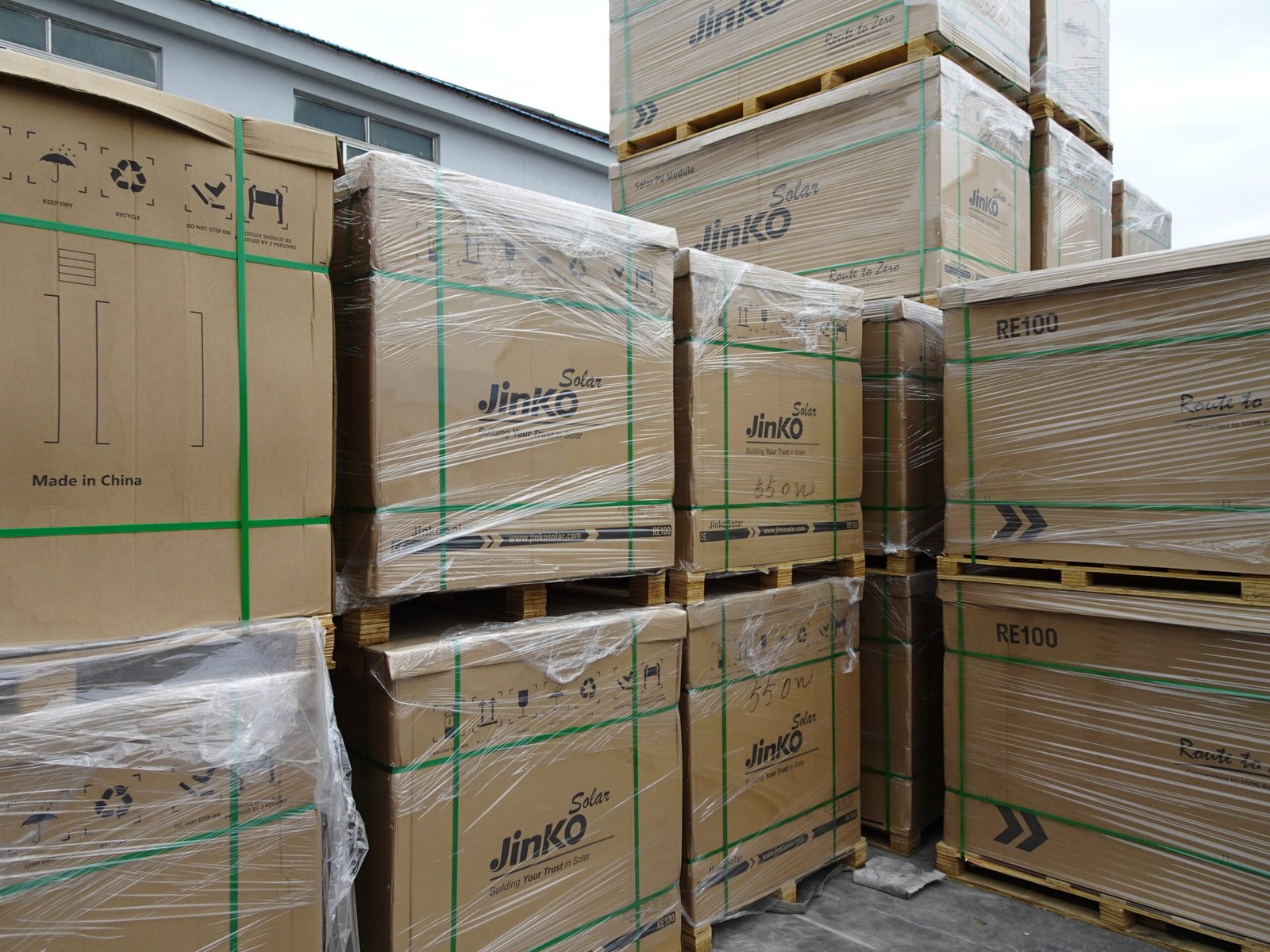
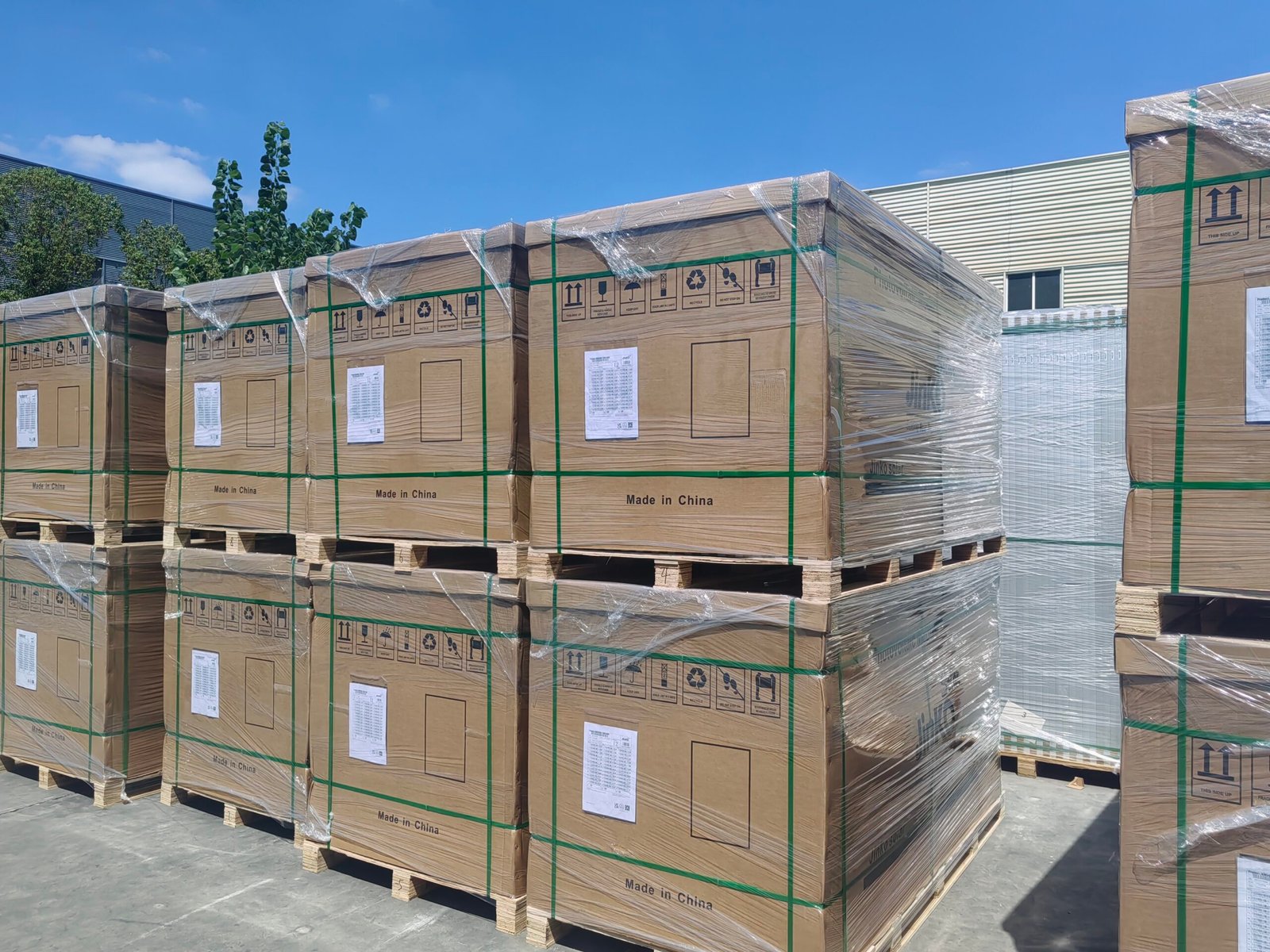
Each Jinko photovoltaic panel is packed 36 pieces per pallet, with 936 pieces fitting into a standard 40-foot high-cube container — an excellent packing density that keeps shipping costs per watt low. Pallets are corner-protected and shrink-wrapped for safe sea freight. For smaller orders we offer mixed pallets and flexible delivery schedules, and every module ships with an individual serial number and flash-test report for full traceability.
Warranty and Long-Term Reliability
This Jinko photovoltaic panel is backed by a 15-year product warranty and a 30-year linear power performance warranty. First-year degradation is below 1.0% and annual degradation is only 0.40% thereafter, so the modules are guaranteed to deliver at least 87.4% of nameplate power after 30 years. That long-term security makes financing straightforward and protects your cash flow for decades.
Jinko Photovoltaic Panel Price and Value
Buyers often ask about the Jinko photovoltaic panel price per watt. While market prices fluctuate with polysilicon and logistics costs, the Tiger Neo series consistently offers one of the best value propositions in the premium segment: slightly higher upfront cost than commodity panels, but significantly lower lifetime cost of energy thanks to higher yield and slower degradation. For distributors and installers who buy Jinko photovoltaic panels in bulk, we offer tiered wholesale pricing — contact us for a current quotation.
Frequently Asked Questions About This Jinko Photovoltaic Panel
What power classes are available?
The Tiger Neo 54HL4R-(V) Jinko photovoltaic panel is available in 425W, 430W, 435W, 440W and 445W. All classes share identical dimensions, so upgrading wattage never changes your mounting design.
Is this module suitable for residential roofs?
Yes — this is precisely the segment it was designed for. The compact footprint, 22 kg weight and high efficiency make it one of the most installer-friendly residential modules in the Jinko range.
How does it perform in hot climates?
Thanks to its N-type cells and low temperature coefficient, the module keeps a noticeably larger share of its rated power on hot days than conventional P-type panels, which is why it is popular in Southern Europe, the Middle East, Africa and Southeast Asia.
What certifications does the module carry?
The module is certified to IEC 61215 and IEC 61730 and carries TUV and UL marks, so it can be installed in Europe, North America and most other markets without additional testing.
Can I order samples before a bulk purchase?
Absolutely. We support sample orders so installers and distributors can verify build quality, flash-test data and packaging before committing to pallet or container quantities.
Quality Control From Factory to Site
Every module we supply passes through multiple quality gates: incoming material inspection, in-line electroluminescence testing after stringing and lamination, and a final flash test recording the actual power of each unit. Automated production lines keep cell-to-module losses low and ensure the label matches the real output. This disciplined approach is one reason the brand consistently tops independent reliability scorecards.
System Design Tips for Rooftop Projects
When designing around 425-445W modules, check the lowest expected ambient temperature for string sizing, respect the 1500V maximum system voltage, and match the inverter MPPT range to the string operating voltage. Higher module power means fewer modules and less racking per kilowatt, which cuts both hardware and labor costs on the roof.
Operation, Cleaning and Maintenance
In most climates natural rainfall keeps the glass clean; in dusty regions a gentle cleaning two to four times a year is usually enough. Avoid abrasive tools and high-pressure washers, inspect clamps and connectors annually, and monitor string performance through your inverter portal to catch anomalies early. With minimal care, the modules will deliver stable output for three decades and beyond.
Compatibility With Inverters and Home Storage
The series works seamlessly with mainstream string inverters, microinverters and power-optimizer systems from all leading brands. For hybrid homes, pairing the array with a battery lets you shift solar energy into the evening hours, and our team can supply a matched package of panels, inverter and storage with unified warranty support.
Sustainability and Environmental Commitment
Choosing this brand also means choosing a manufacturer with a strong sustainability record: factories increasingly powered by renewable energy, ambitious carbon-reduction targets across the supply chain, and recyclable module materials. For buyers with ESG reporting obligations, complete environmental documentation is available on request.
Technical Support and After-Sales Service
Our relationship with customers does not end at delivery. We provide remote commissioning support, help installers with string configuration and monitoring setup, and handle any warranty claim through a clear, documented process. Spare modules from the same production batch can be reserved for larger projects so replacements always match the original installation.
Why Buy Your Jinko Photovoltaic Panel From Us
As a specialized photovoltaic modules manufacturer and energy storage solutions provider, we combine factory-direct pricing with professional export service. We keep popular Jinko photovoltaic panel models in stock for fast dispatch, provide complete customs documentation, and support you with design advice before and after the sale. Whether you need a single pallet for a housing project or full containers for distribution, every Jinko photovoltaic panel order receives the same careful attention.
Typical Applications
Thanks to its compact size and premium efficiency, this module is a versatile choice across many project types:
- Residential pitched-roof systems on tile, metal or shingle roofs
- Commercial and industrial flat-roof installations
- Carports, canopies and pergola structures
- Balcony and facade-adjacent distributed systems
- Small ground-mount arrays and agricultural buildings
Because of its low degradation and strong weak-light behavior, the module performs particularly well in regions with frequent cloud cover, where every hour of diffuse light still translates into useful production.
Comparing the 54HL4R With Other Tiger Neo Models
Within the Tiger Neo family, the 54HL4R-(V) is the residential-format option. The larger 72HL4 series offers higher wattage per module for commercial roofs and ground-mount plants, while the 78HL4 series pushes power even further for utility-scale projects. Choosing between them is mainly a question of roof geometry, handling preferences and logistics: smaller modules fit complex roofs better, while larger modules reduce installation time per kilowatt on open spaces. Our engineering team can model both options for your site and recommend the most economical configuration.
Roof Safety and Fire Rating
Rooftop installations demand special attention to fire behavior. The module carries a Class A fire rating and has been tested for resistance against hot spots that can arise from partial shading or soiling. Combined with rapid-shutdown-compatible system design, the array meets the strictest residential safety codes in force in North America and Europe.
Long-Term Performance and Degradation
Degradation behavior is where N-type technology truly separates itself from older designs. With first-year degradation below 1.0% and linear annual degradation of only 0.40%, the module retains at least 87.4% of its original power after 30 years. Lower degradation translates directly into more kilowatt-hours sold or consumed over the life of the system.
What is the typical lead time?
For stock models, dispatch usually takes three to seven working days after order confirmation. Factory-direct container orders are typically produced and shipped within four to six weeks, depending on quantity and the production schedule.
Do you provide technical documentation?
Yes. With every quotation we provide the official datasheet, installation manual, certificates and warranty terms. Flash-test reports and serial-number lists accompany each shipment, and our engineers remain available for technical questions throughout the project.
What payment and shipping terms do you offer?
We support flexible international trade terms including EXW, FOB, CIF and DDP, and accept T/T, L/C and other common payment methods. Our logistics team works with experienced freight forwarders to make sure your modules arrive safely and on schedule, with full cargo insurance available for every shipment.
Proven Performance in Global Projects
Modules from the Tiger Neo family have been deployed in gigawatt-scale projects across Asia, Europe, the Middle East, Latin America and Africa. From alpine rooftops to coastal commercial buildings, field data consistently confirms the high energy yield and reliability of this technology. Independent test laboratories regularly rank the series among the top performers in their annual reliability scorecards, giving homeowners, EPC contractors and investors confidence that the system will perform as modeled for decades.
Monitoring Your System Performance
Modern residential systems include module-level or string-level monitoring through the inverter app. We recommend checking production weekly during the first months to establish a baseline, then monthly afterwards. A sudden drop in a single string usually indicates shading from new vegetation growth or a connector issue rather than a module defect, and our support team can help you interpret the data remotely.
Planning Permission and Grid Connection
In most countries, rooftop systems below a certain capacity follow a simplified notification process, while larger systems require formal grid-connection approval from the local utility. Installers familiar with local rules can usually handle the paperwork on your behalf. We support the process with complete technical documentation, certificates and test reports whenever authorities or utilities request them.
Getting the Most From Your Investment
Orientation and tilt still matter more than any single module specification: a south-facing array at the right angle will outperform a poorly oriented one built with the best modules on the market. Keep trees trimmed, avoid unnecessary shading from antennas or vent pipes, and design the layout with future roof maintenance in mind. Combined with a premium module, these simple planning steps secure the highest possible return on your solar investment.
Request a Quote
Ready to order or compare models? Browse our complete Jinko photovoltaic panel category for more wattages and formats, or learn more about the brand on the official JinkoSolar website. Contact us today for the datasheet, pricing, stock availability and shipping options for the Tiger Neo 54HL4R-(V) series — our sales team replies within 24 hours.


